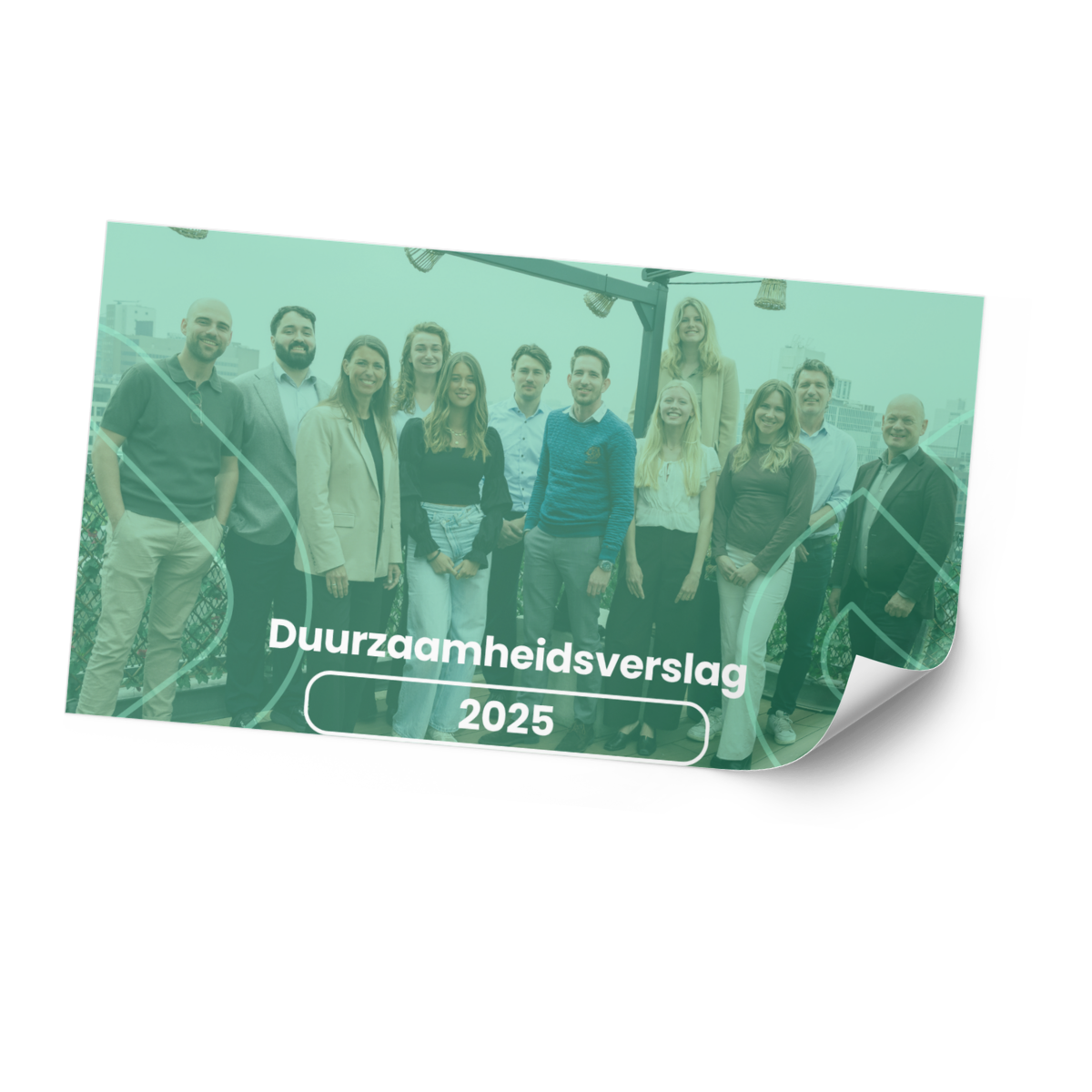
As an organization that guides others in sustainability reporting, it is natural for us to report ourselves. Not because we have to, but because we believe that transparency is the foundation of trust and real impact.
The report was prepared according to the VSME, the Voluntary Sustainability Reporting Standard for non-listed SMEs. We are not required to report but strongly believe in the importance of sustainability reporting. The VSME provides a concrete framework for this, which also leaves room for its own additions.
The VSME is a European reporting standard developed specifically for SMEs. It is an accessible standard for organizations that wish to voluntarily provide insight into their environmental, social and governance performance. It provides structure without the complexity of large reporting frameworks such as the CSRD. You choose the basic module or the extended module, depending on the information needs of your stakeholders. You report only on the topics relevant to your organization. The result: a clear, reliable sustainability report that shows where your organization stands and where you want to go.
We prepared the VSME report with the application of both the basic and extended modules. We voluntarily conducted a dual materiality analysis (DMA) to determine which sustainability themes are most relevant to our organization and stakeholders. With a DMA you map out which sustainability themes affect your organization and which themes your organization has an impact on.
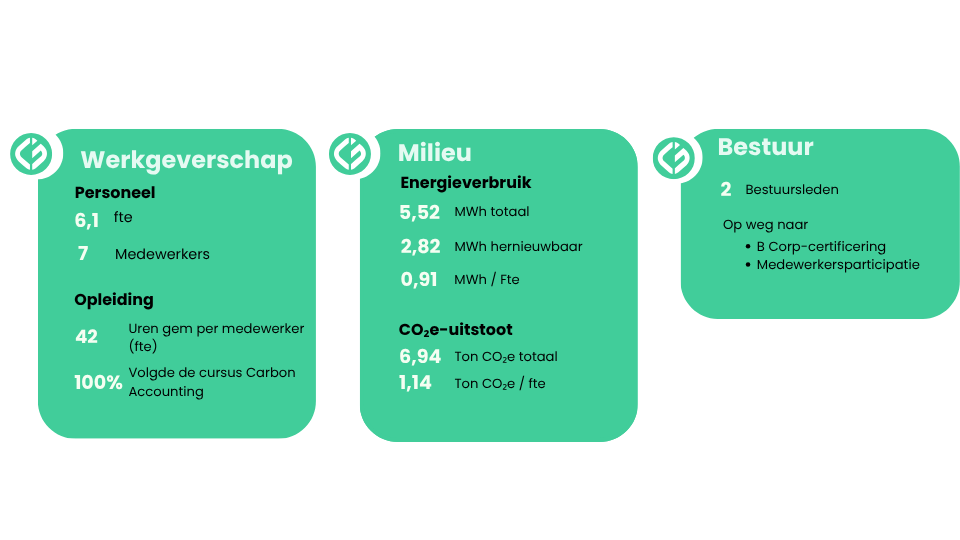
Based on the DMA we identified the following material themes: employment, environment, governance, community and company-specific issues. We then mapped our carbon emissions, described our policies and set out our ambitions for the future, including achieving our B Corp certification.
The process remains instructive for us as well. About ourselves, about what we are already doing and about what could be done better. For example, conversations with employees during the VSME process revealed the need for a pension plan, after which we immediately took this up in 2026. Similarly, mapping our CO₂ emissions has led to us eating vegetarian lunches in the office from 2026 and, leading up to net-zero, offsetting our remaining emissions. That is precisely the value of reporting: not the report itself, but the insights that guide concrete sustainability and improvement.
Stakeholders such as customers, employees, funders and partners are increasingly demanding insight into the sustainability performance of the organizations they work with. A VSME report gives your organization the language to have that conversation. It strengthens your position and increases your credibility. By providing insight into where the greatest sustainability impacts, risks and opportunities lie, you can make targeted choices and implement concrete improvements.
Don’t wait until it becomes mandatory. Start now, learn from the process and build an organization you can be proud of.